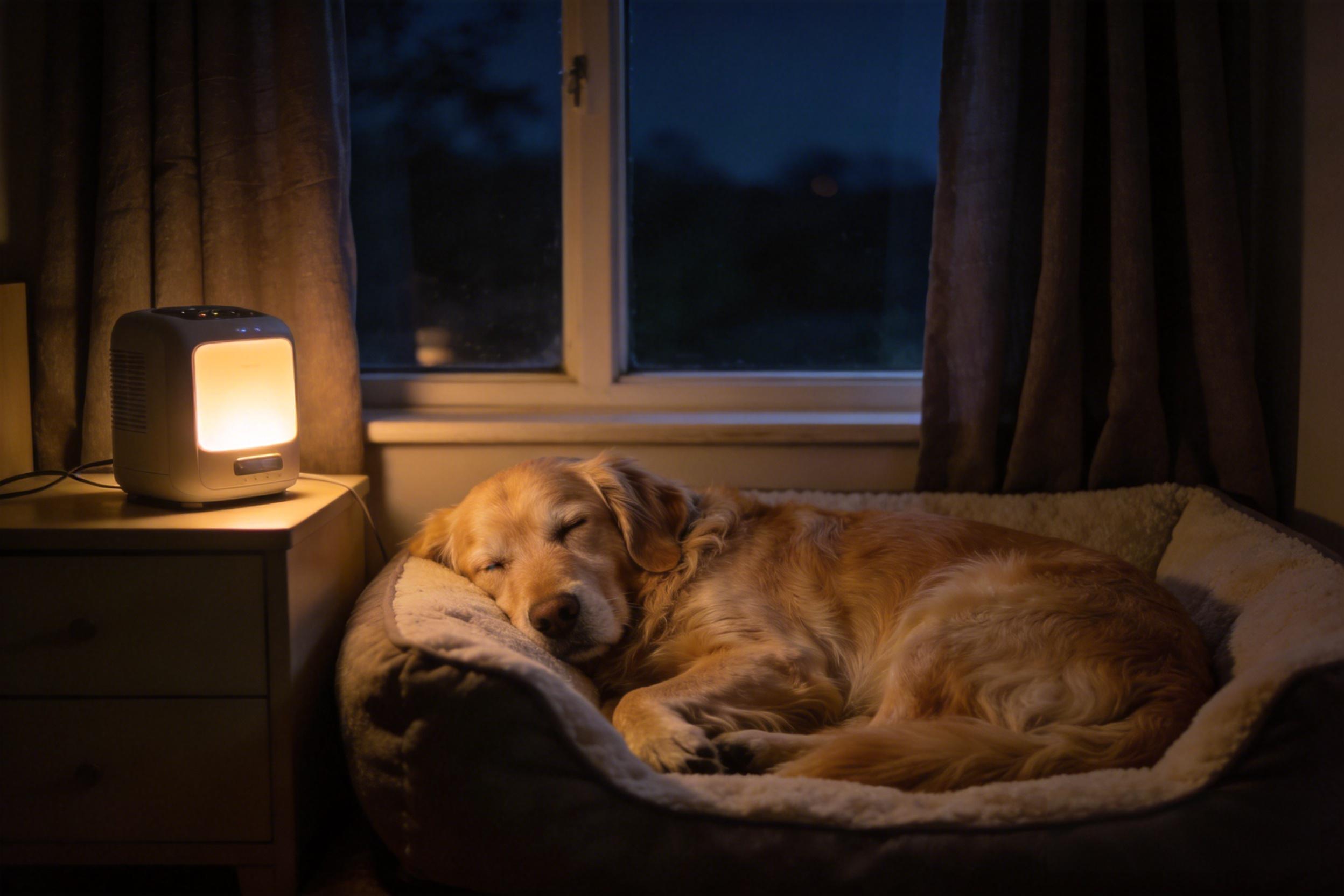
Short Summary: Is your dog’s nighttime barking turning your home into a restless zone? This comprehensive, vet-aligned guide moves beyond generic advice to help you diagnose the root cause — from canine cognitive dysfunction to environmental triggers — and implement a tailored 2026 protocol. We cover medical evaluations, behavioral modification, environmental management, and compare the latest humane anti-bark solutions so you and your dog can finally get a full night’s rest.
Why Your Dog’s Nighttime Barking Is More Than Just a Nuisance
If you are reading this, you are likely part of the majority of dog owners who have been jolted awake by the sound of their dog barking at seemingly nothing. You search for “stop dog barking at night” not just for the sake of your own sleep, but because you are worried about your dog’s well-being and the potential tension with neighbors.
Ignoring the problem isn’t just a recipe for exhaustion; it can be detrimental to your dog’s health. Nighttime barking is often the first clear signal of an underlying issue that needs addressing. A dog’s super senses can trigger barking, but so can anxiety, health issues, or boredom. Addressing it effectively requires moving beyond quick fixes and adopting a systematic, investigative approach that prioritizes your dog’s welfare.
The “Invisible” Threat: Understanding the Canine Senses
Your dog experiences the night in a radically different way than you do. Their hearing is exponentially more sensitive, picking up frequencies up to 60,000 Hz compared to our 20,000 Hz. This means they hear every creak, rumble, and distant car door that you miss. They also have a superior sense of smell and can detect wildlife like raccoons, coyotes, or possums long before you ever see them.
When we hear a dog barking at night, we might assume they are “barking at nothing.” However, this is almost never the case. They are reacting to stimuli — sounds, smells, or movements — that are simply outside our human perception. Understanding this sensory gap is the first step to empathy and effective problem-solving.
Why It Matters: The Domino Effect of Lost Sleep
Sleep is not a luxury for dogs; it is a biological necessity for cognitive function and physical health. When a dog’s sleep is constantly disrupted by their own barking, it creates a cycle of stress and poor health. For senior dogs, sleep disruption can be particularly dangerous, exacerbating symptoms of canine cognitive dysfunction (similar to dementia in humans).
Furthermore, for you, the owner, chronic sleep deprivation can lead to stress, decreased patience, and tension in the household. This stress can, in turn, be transmitted to your dog, making their anxiety and barking worse. It’s a vicious cycle that breaks the bond of trust and comfort in your home.
Decoding the Bark
- High-Pitched, Repetitive Barking: Often indicates fear, anxiety, or a greeting response. If paired with pacing or trembling, it’s likely anxiety-driven.
- Deep, Rhythmic Barking: This is typically a territorial or alarm bark, warning off an intruder or perceived threat.
- Whining or Howling: More commonly associated with loneliness, separation anxiety, or boredom.
- Single, Sharp Barks: Often a startle response to a sudden, unfamiliar noise.
Factors and Potential Causes
- Medical (Crucial First Step): Any sudden change in behavior warrants a vet visit. Pain from arthritis, dental issues, or a urinary tract infection can cause a dog to become restless and vocal at night. In senior dogs, canine cognitive dysfunction is a leading cause of nighttime confusion and barking, as dogs become disoriented and forget their surroundings.
- Environmental & Sensory: Nocturnal wildlife, stray cats, and distant dog barks are prime triggers.
- Psychological (Anxiety & Boredom): “Socially facilitated barking” occurs when your dog joins a neighborhood chorus. Separation anxiety can manifest at night, even when you are home, if your dog is locked away from you. A lack of physical and mental exercise during the day can also lead to pent-up energy that surfaces as nighttime barking.
- Routine Changes: Many dogs develop or worsen separation anxiety when household routines shift. Dogs used to constant company may struggle with a new normal of being alone at night.
| Factor | Primary Symptom in the Bark | Recommended Action |
|---|---|---|
| Medical Condition | High-pitched or pained yelp, whimpering, pacing, restlessness | Immediate vet visit to rule out pain, UTIs, or cognitive issues |
| Fear/Anxiety | High-pitched, frantic barking, trembling, panting, seeking you out | Address the trigger (noise phobia), use calming aids, consider a trainer for desensitization |
| Boredom/Loneliness | Monotonous, repetitive barking or howling; responds to attention | Increase daytime exercise, provide puzzle toys, ensure a consistent bedtime routine |
| Environmental Trigger | Alert, territorial barking (deep and rhythmic), usually directed at a window/door | Block visual and auditory access to outside stimuli (curtains, white noise) |
| Canine Cognitive Dysfunction | Pacing, disorientation, staring at walls, barking at nothing, changes in sleep-wake cycle | Consult your vet about medication and management strategies specifically for CCD |
Section 1: The Diagnostic Protocol
1. The Veterinary Exam: Your First and Most Important Step
Before you try any training, schedule a vet appointment. This isn’t just a formality; it’s a necessity. A wellness check can reveal underlying medical conditions that are the true cause of the barking. Conditions like canine cognitive dysfunction, urinary tract infections, or arthritis are common culprits that are invisible to the naked eye. For senior dogs, this is non-negotiable.
2. Environmental Audit: Eliminating the Triggers
Your goal is to create a sensory “safe space” for your dog.
- Block Visuals: If they sleep near a window, close the curtains or blinds.
- Mask Audio: Drown out the sounds of the night with a white noise machine, a fan, or a radio tuned to gentle music. This is one of the most effective and immediate solutions to mask distant sounds or wildlife movement.
- Create a “Cocoon”: If your dog is crate-trained, a covered crate (with proper airflow) can act as a secure, comforting “den” that helps them feel safe and less reactive to external stimuli.
3. Behavioral Inventory: The Pre-Bedtime Routine
You can dramatically influence your dog’s nighttime behavior through a consistent, calming bedtime routine.
- Exercise: A tired dog is a quiet dog. Ensure your dog gets a long, engaging walk and a final potty break right before bed to burn off excess energy. Incorporate some training exercises or scent work to engage the brain.
- Calming Rituals: After the walk, dim the lights and keep things quiet. A short snuggle or a gentle massage can signal that it’s time to wind down.
- Avoid Reinforcement: Do not yell at your dog or go to them when they are barking. This can reinforce the behavior as a way to get your attention — a common pitfall known as “intermittent reinforcement,” which intensifies the problem. Wait for a pause in the barking, however brief, to reward them with calm praise or a treat.
Section 2: Solutions and Professional Recommendations
For Anxious & Fearful Dogs: Desensitization and Counter-Conditioning
This is the gold standard for treating anxiety-related barking. It’s not a quick fix, but it addresses the root cause. The goal is to change your dog’s emotional response to the trigger from fear to calm.
- Identify the Trigger: Is it a specific sound, like a car door? Or just “nighttime” in general?
- Desensitization: If it’s a sound, play a recording of it at a very low volume that doesn’t elicit a reaction.
- Counter-Conditioning: While the quiet sound plays, give your dog high-value treats. Over time, they learn that the scary sound predicts good things. Gradually, over weeks, increase the volume.
- Manage the Environment: In the interim, you must avoid exposure to the trigger. If you can’t, the process fails. This is where white noise and blocked windows are crucial.
”Quiet” Command: Worth Trying, But Know Its Limits
Teaching a “quiet” or “settle” command is useful, but it’s essential to understand that a dog in a state of panic cannot learn. It is most effective for alert barking, where the dog is not in a panic but is simply reacting. Reward the dog the moment they stop barking, then gradually add a cue word like “quiet.”
Professional Intervention
If you’ve exhausted your options, don’t hesitate to seek help. A certified professional trainer or a veterinary behaviorist is not a sign of failure; it’s a sign of a dedicated owner. A specialist can pinpoint triggers and design a specific plan for your dog’s unique needs.
Section 3: Product Comparison
Anti-Bark Devices
| Technology | Product Type | Effectiveness | Best For | Our Take |
|---|---|---|---|---|
| Citronella Spray | Collar | Very high (78% success rate in one study) | Interrupting alert barking and allowing you to reinforce quiet behavior | Recommended as the most humane and effective option for moderate barkers; disrupts the behavior without causing pain |
| Ultrasonic | Stationary device/collar | Low | Rarely effective due to poor sensitivity | Not recommended; professional consensus is these devices are seldom sufficiently sensitive to be truly effective |
| Vibration | Collar | Variable | A less aversive option for dogs not triggered by scents | A potential alternative if citronella is ineffective or your dog reacts to the scent |
| Sound/Shock | Collar | Variable | Only as a last resort | Strongly cautioned — can suppress barking but increase fear and anxiety, leading to other behavioral problems |
Calming Aids: Supplements and Pheromones
For anxiety-driven barking, these can be powerful adjuncts.
- Pheromone Sprays: Release synthetic “dog-appeasing” pheromones that can create a sense of safety and security in the sleeping area.
- Calming Supplements: Many owners find relief in natural calmers, like special treats or herbal remedies that soothe nerves. Always consult your vet before starting any supplement.
- Anxiety Wraps: Apply gentle, constant pressure to help calm anxious dogs.
Smart Trackers
A smart GPS tracker with bark monitoring can help you understand your dog’s behavior. You can track if there’s a spike in barking, correlating it with activity or rest patterns to figure out the root cause.
Recommended Products for Peaceful Nights
See the comparison cards below for our top picks across immediate behavior interruption, environmental masking, and anxiety support.
FAQ
1. Should I ignore my dog barking at night?
It depends. It is a bad idea to ignore barking if it is due to a medical issue like a urinary tract infection, a sign of pain in an arthritic senior dog, or caused by canine cognitive dysfunction. If you are certain the barking is purely for attention or from boredom, and your dog is healthy, then ignoring it and rewarding quiet moments can be effective. However, when in doubt, always check for an underlying cause first.
2. Why has my dog suddenly started barking at night when he never did before?
A sudden change in behavior is the strongest indicator that something is wrong. The first step is a vet visit to rule out medical causes like pain, a urinary tract infection, or the onset of canine cognitive dysfunction in older dogs. If a medical issue is ruled out, consider recent environmental changes — a move, a routine change, or a new sound outside your home can all cause anxiety that manifests as nighttime barking.
3. Is it normal for a puppy to bark at night?
Yes, very normal. A puppy barking at night is usually due to being in unfamiliar surroundings, feeling lonely, and experiencing separation from their mother and littermates for the first time. Gentle crate training is the best solution. Place the crate near you at night so they can hear and smell you, which will reassure them. As they gain confidence, you can gradually move the crate to its final location.
4. Can a dog bark themselves to death?
No, a dog will not bark themselves to death. However, excessive, frantic barking is a sign of severe stress or pain. It’s crucial to address the underlying cause for their welfare. Chronic stress from constant barking can lead to other health problems over time.
5. What is the fastest way to stop my dog barking at night?
The fastest way is to identify and remove the trigger. If you can’t, use a two-pronged approach: mask the trigger with a white noise machine to drown out the sound, and interrupt the behavior with a citronella spray collar. This combination provides immediate relief. However, these are management tools — for a permanent solution, implement the full diagnostic protocol and behavioral modification strategies outlined in this guide.
Conclusion
Nighttime barking doesn’t have to be a permanent fixture in your household. By adopting a “detective mindset,” prioritizing a veterinary exam, and implementing the strategies outlined here — from environmental management to advanced training — you can help your dog feel safe and secure, restoring peace to your home.
Disclaimer: This article is for informational purposes only and does not constitute veterinary or behavioral advice. Consult a veterinarian or certified trainer for persistent or sudden behavioral changes.