Short Summary: Dog obedience training is the cornerstone of a harmonious relationship, transforming your pet into a confident and well-mannered companion. This guide covers the science-backed basics of positive reinforcement, offering actionable steps, product recommendations, and expert insights tailored for US dog owners in 2026.
Why Obedience Training Matters More Than Ever
One of the most common concerns pet owners raise isn’t about a physical ailment — it’s about behavior. “My dog won’t listen,” “He pulls on the leash,” or “She’s destroying the house.” In 2026, the dynamics of pet ownership have evolved. We aren’t just owners; we are pet parents, and our dogs are increasingly integrated into our busy, urban lives.
The market reflects this shift. Spending on pet services is booming, with the US leading the global dog training services market. We are seeing a rise in doggy daycare and training centers that offer structured socialization, much like a preschool for puppies. This cultural shift towards treating dogs as family members has created a new standard of care. A well-trained dog isn’t just a polite dog; it’s a happier, less anxious member of the household.
The Problem: Why Are We Searching for Training Basics?
You are likely searching for training basics because you are facing a common challenge. Perhaps you’ve brought home a new puppy, or maybe you’ve adopted an adult dog whose behavior is a mystery. Many new pet parents are overwhelmed by conflicting advice.
The root of the problem is often miscommunication. Humans speak in words; dogs speak in body language and learned associations. We expect them to understand our rules without teaching them in a language they comprehend. This leads to frustration on both sides, resulting in unwanted behaviors like excessive barking, chewing, or leash pulling.
What Is Dog Obedience Training, Really?
Dog training is the application of behavior analysis. It’s not about dominating your dog or becoming the “alpha,” a notion that has been thoroughly debunked by modern veterinary behaviorists. Instead, it’s about modifying behavior through environmental consequences.
A dog learns through interactions with its environment. There are two main ways they learn:
- Classical Conditioning: This is an involuntary association. Think of Pavlov’s dogs. When you pick up the leash, your dog gets excited because they associate the leash with a walk.
- Operant Conditioning: This is voluntary learning. A dog learns to associate a behavior with a consequence. If sitting results in a treat (a pleasant consequence), they are more likely to sit again.
Why Positive Reinforcement Is the Gold Standard
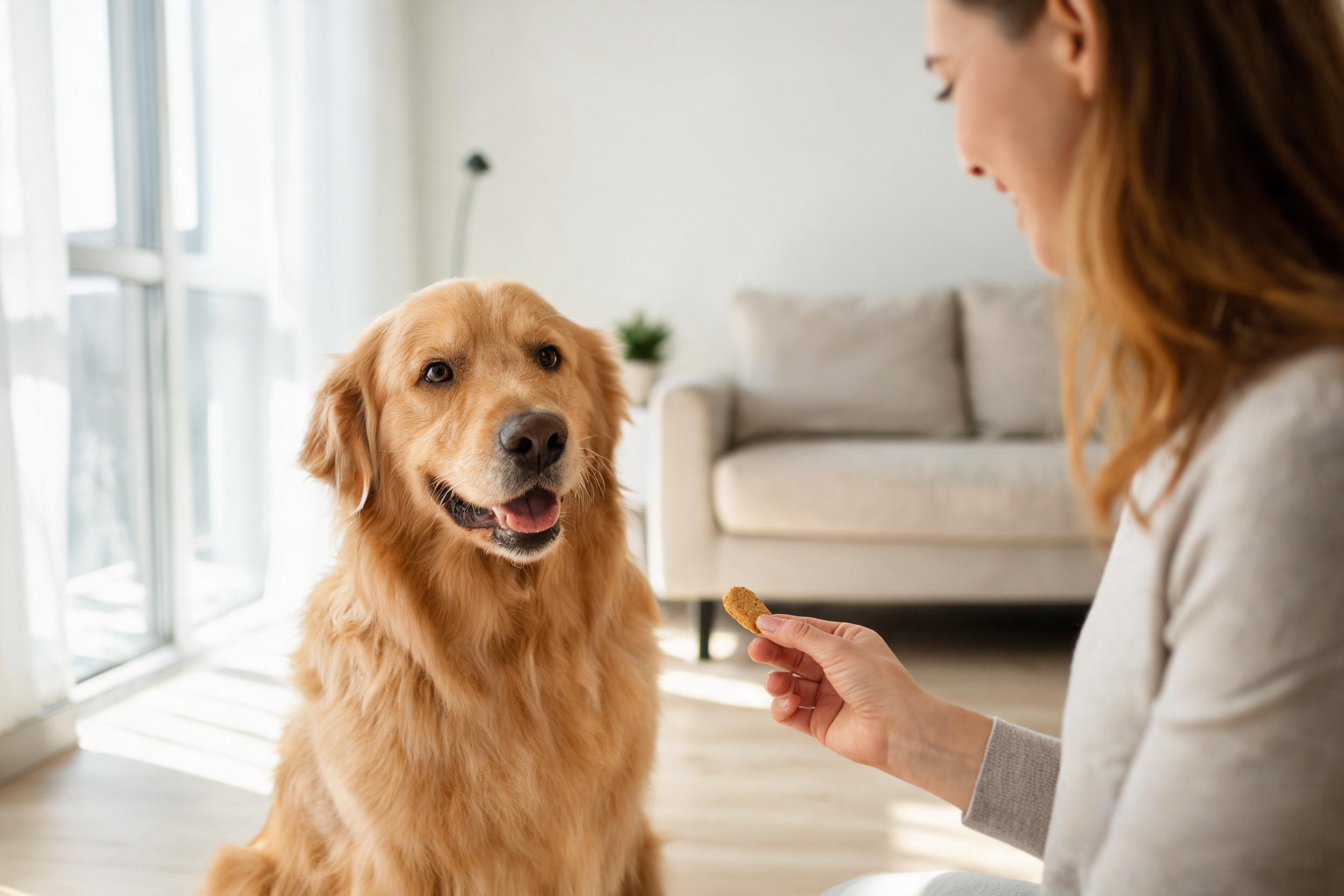
The science is clear: reward-based training, or positive reinforcement, is the most effective and least harmful method for teaching your dog. It involves adding something pleasant — like a treat, toy, or praise — to increase the likelihood of a behavior being repeated.
A landmark study published in the Journal of Veterinary Behavior directly compared the effects of positive reinforcement versus negative reinforcement (often involving aversive stimuli). The findings were profound. Dogs trained with negative reinforcement showed more stress-related behaviors, such as lowered body posture, whereas dogs in the positive reinforcement group were more attentive to their owners.
Contrast this with punishment-based methods, which can lead to fear, anxiety, and aggression. The American Veterinary Society of Animal Behavior explicitly supports the use of reward-based methods for all canine training.
The “No Alpha” Rule
Modern behavioral science has moved away from dominance-based training, which relies on intimidation. Dogs are not wolves trying to usurp your position as pack leader. Using choke chains, prong collars, or shock collars doesn’t build trust; it breaks it. Research confirms that aversive methods can have negative effects on the dog’s welfare and the dog-owner relationship.
Section 1: The Building Blocks of Training
- Patience and Consistency: This cannot be overstated. If you say “sit” one day and “sit down” the next, you’ll confuse your dog. Decide on your cues and stick to them.
- Short Training Sessions: Dogs, especially puppies, have a short attention span. Keep sessions short — about 10 to 15 minutes — and always end on a positive, successful note.
- Identify the Motivator: Not all dogs are food-motivated. While food is often the fastest way to a dog’s heart, particularly in early stages, some prefer a favorite toy or a “good boy!” scratch behind the ears. A scientific study showed that while food shortened response times in early training, other rewards became equally effective later.
- The Quiet Place: Start training in a distraction-free environment. Once your dog has mastered a command in the living room, slowly introduce distractions by practicing in the backyard, the park, and finally, on a busy sidewalk.
Core Commands to Master
- Sit: Often the easiest to teach. Hold a treat by your dog’s nose and slowly move it up and back over their head. As their head goes up, their rear will naturally go down.
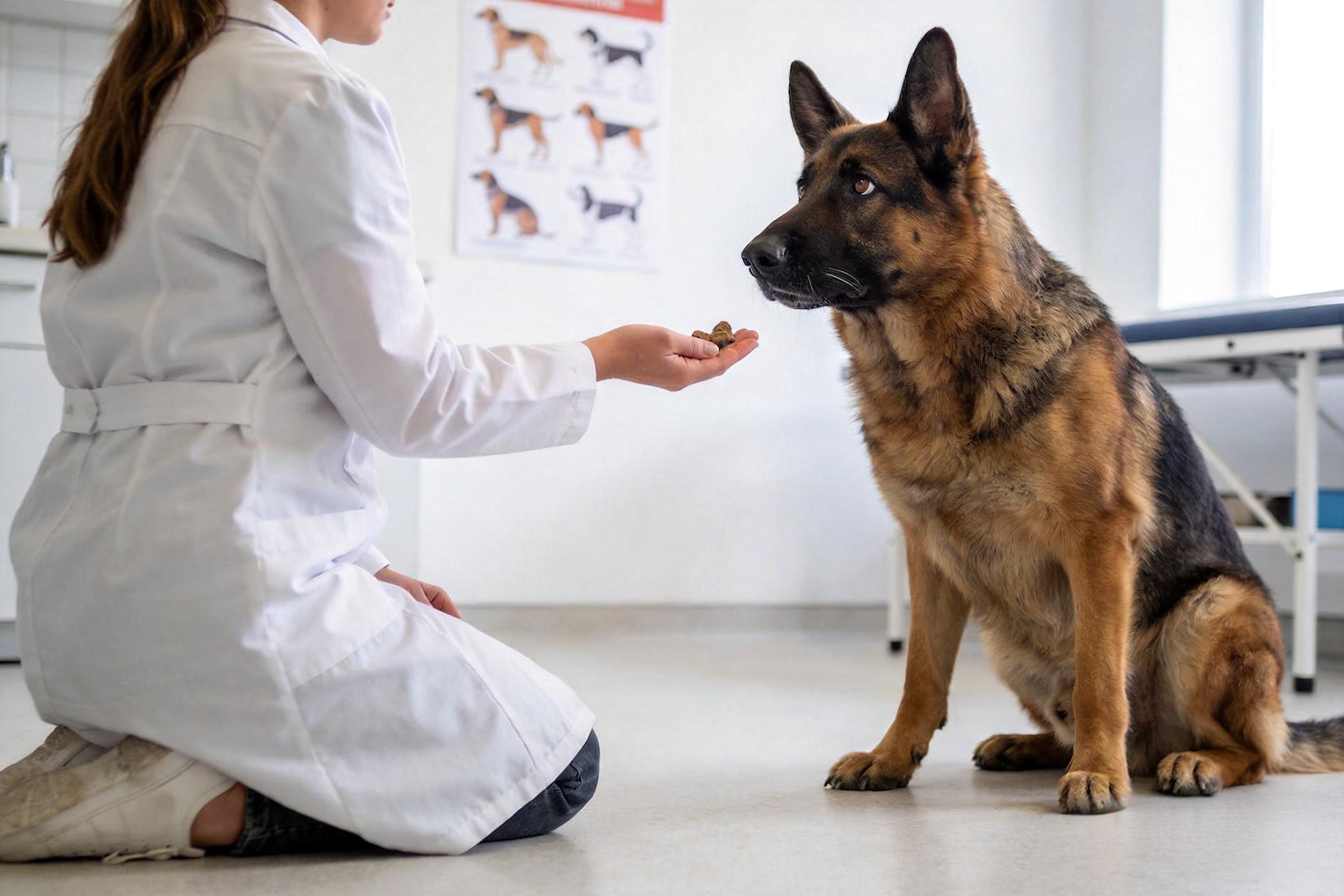
- Stay: Crucial for safety. Begin with your dog in a sit. Offer a treat in your open palm and say “stay.” Wait only a second or two before giving the treat. Gradually increase the duration before releasing them.
- Come: A life-saving command. Always make it the best thing in the world. Crouch down, open your arms, and use a happy, excited voice. When your dog comes, reward them heavily. Never call them to you to punish them.
- Down: This is a calming position. Start with a treat in your hand and lower it straight to the floor. Your dog will follow the treat into a lying position.
- Leave It: Crucial for preventing your dog from picking up dangerous objects or food off the street. Start with a treat in your closed fist. Let your dog sniff and lick. The moment they back away, open your hand and give them the treat.
Section 2: Practical Solutions and Recommendations
The Power of the Crate and Potty Training
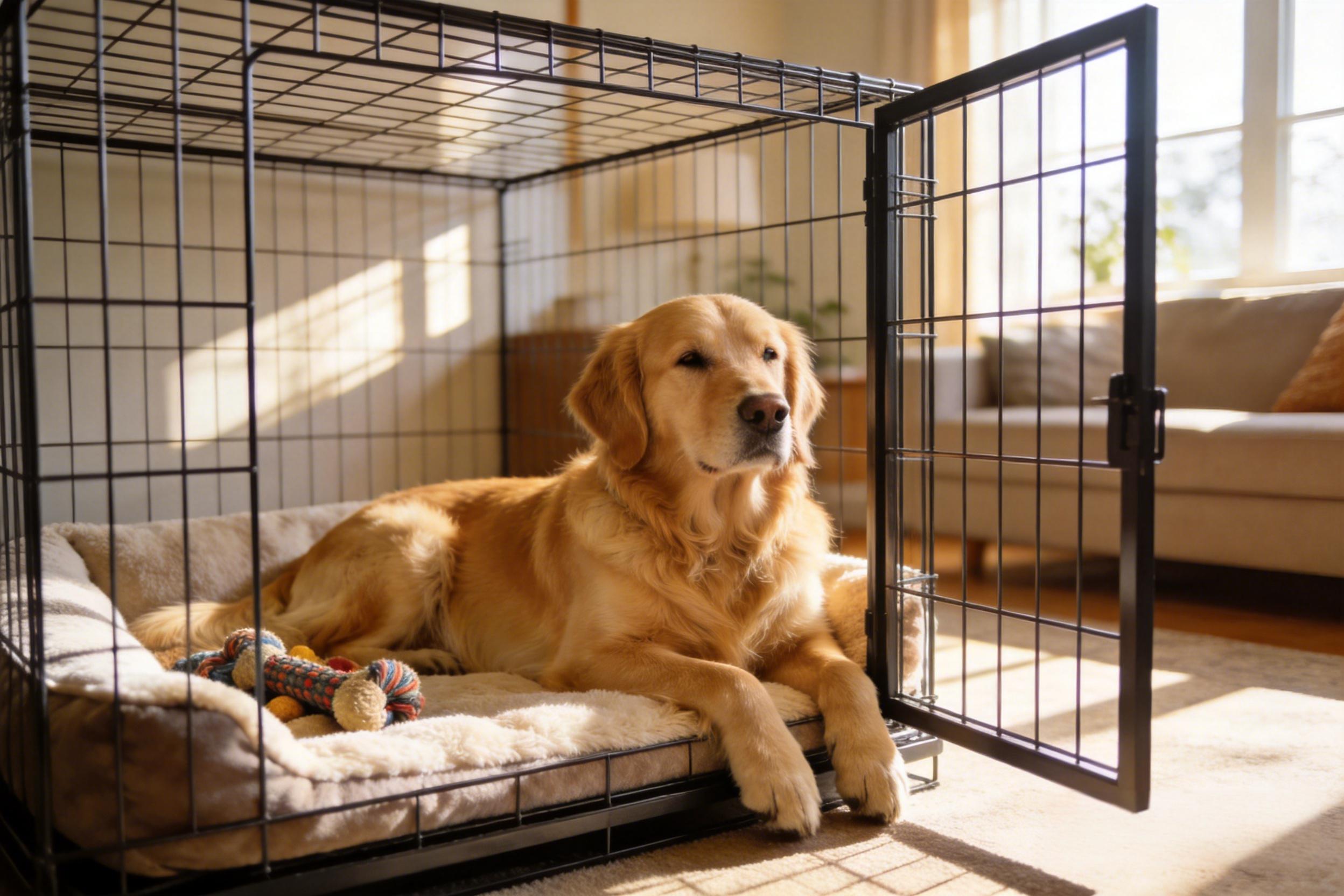
Crate training is one of the most effective tools for house training and providing a safe haven for your dog. Dogs naturally avoid soiling their sleeping area, making the crate a powerful potty training aid.
- Introducing the Crate: Make it a palace, not a prison. Put their bed, a chew toy, and treats inside. Let them explore on their own, and feed them their meals inside with the door open, then gradually closed.
- Potty Breaks: Take your puppy out frequently — after meals, naps, and play. When they eliminate where you want them to, reward them with high-value treats and praise.
Leash Manners: No More Pulling
A dog that pulls on the leash is a safety hazard for both of you. Loose-leash walking is about teaching your dog that being by your side is the most rewarding place to be.
- Be a Tree: If your dog pulls, stop moving. Only start walking again when the leash is loose.
- Change Direction: Don’t let your dog drag you towards the exciting squirrel. Turn around and walk the other way. This teaches them to pay attention to you.
Section 3: Training Methods Comparison
| Feature | Positive Reinforcement (R+) | Balanced Training | Dominance/Aversive Training |
|---|---|---|---|
| Method | Rewards desired behaviors with treats, toys, or praise | Uses a mix of R+ and aversive corrections (choke chains, e-collars) | Relies on physical corrections and intimidation to assert the owner as “alpha” |
| Scientific Backing | Strong — supported by AVSAB and numerous peer-reviewed studies showing increased attentiveness and improved welfare | Weak — the use of aversives is scientifically proven to cause stress and fear | Debunked — the “alpha” theory has been discredited; aversive methods can cause aggression and anxiety |
| Effectiveness | Highly effective for long-term behavior change; builds a strong, trusting bond | May produce fast results but damages trust and often suppresses behavior rather than fixing the root cause | Often fails in the long term and damages the human-animal bond |
| Risk | Low risk — safe and fun for the dog | High risk — can cause physical injury and psychological harm | Extreme risk — dogs trained with aversives often exhibit fear, avoidance, and defensive aggression |
The Verdict: The scientific consensus is clear. Positive reinforcement is not just a trend; it is the best practice for dog training. Focusing on what your dog should do, rather than punishing them for what they shouldn’t, is the only way to build a relationship based on trust and cooperation.
Recommended Products for Your Training Journey
See the comparison cards below for our top picks across treats, harnesses, and clicker training.
FAQ
1. When should I start training my puppy?
Right now. The best time to start is as soon as you bring them home. Puppies are sponges for learning. Keep sessions short, fun, and reward-based.
2. Is my dog too old for obedience training?
Absolutely not. The saying “you can’t teach an old dog new tricks” is a myth. Senior dogs can and do learn. They may have more experience but can still benefit from the mental stimulation and bonding that training provides.
3. Do I need to hire a professional dog trainer?
Not always, but it can be a fantastic resource. Group classes are a great, affordable way to socialize your dog and get professional support. If you encounter behavioral issues like aggression or severe anxiety, consult a certified trainer who uses positive reinforcement.
4. How do I stop my dog from pulling on the leash?
Start by practicing in a quiet area. Use the “be a tree” method — if the leash goes tight, stop walking. The moment there is slack, start walking again. Consider using a no-pull front-clip harness to give you more control without causing pain.
5. What if my dog isn’t interested in treats?
Not all dogs are food-driven. Find what works for them. Some dogs are motivated by a favorite squeaky toy, a game of tug, or high-pitched praise. The reward is whatever your dog finds reinforcing.
Conclusion
Embarking on obedience training is one of the most rewarding things you can do for your dog. It’s not about creating a robot who obeys your every command. It’s about building a foundation of communication and trust. A well-trained dog is a confident dog, and a confident dog is less likely to develop anxiety or behavioral issues.
Disclaimer: This article is for informational purposes only. Consult a certified trainer for persistent behavioral challenges.