Short Summary: Socialization is the cornerstone of a confident, well-adjusted dog, but it’s a common misconception that it’s only for puppies. This guide provides a veterinary-backed, realistic approach to socializing dogs at any life stage, offering specific strategies for adult rescues, progress tracking, and 2026 insights that go beyond simple checklists.
Why “Socialize My Dog” Is One of the Top Searches for Pet Owners
You’ve likely found this article because you’re facing a common yet stressful situation. Your dog, whether a new puppy or an adult rescue, reacts with fear, aggression, or anxiety to the world around them. Perhaps they bark uncontrollably at strangers, lunge at other dogs on walks, or seem terrified of everyday sounds and objects. This is not just a “bad behavior” problem; it’s a sign of fear and stress. For an owner, an unsocialized dog can be a social and emotional burden, making trips to the vet, walks in the neighborhood, or having guests over a source of significant anxiety.
Understanding Socialization: More Than Just “Playing Nice”
What It Is and Why It Matters
Many people believe socialization is simply about getting your dog to play with other dogs. However, true socialization is a much broader concept. It is the process of carefully and positively introducing your dog to a wide variety of people, animals, environments, and experiences to help them navigate the world with confidence and ease. A well-socialized dog learns that novel situations are not a threat, but just a normal part of life. This is preventative behavioral health at its finest.
The Critical Socialization Window: What It Means for Puppies
Science tells us that there is a prime period for socialization in a puppy’s life, roughly between three and 14 to 16 weeks of age. During this sensitive period, a puppy’s brain is most open to new experiences. Things encountered during this window — different people, sounds, and surfaces — are more easily accepted as normal, creating a “first draft” of reality for the dog. While this window is crucial, it is not a cliff. The ability to learn and form new associations does not shut off after 16 weeks; it simply becomes a more deliberate and effortful process.
Signs of an Under-Socialized Dog
-
Overt (or “Reactive”) Behaviors:
- Barking and Lunging: Reacting aggressively towards people, dogs, or objects they perceive as a threat.
- Growling: A crucial form of communication indicating discomfort. Punishing a growl can suppress this warning sign, potentially leading to a bite without a vocal warning in the future.
- Snapping or Biting: An escalation when other signals have been ignored.
-
Subtle (or “Shut Down”) Behaviors:
- Cowering, Freezing, or Hiding: The dog tries to make themselves invisible or escape the situation.
- Tucking Tail and Flattening Ears: Classic signs of submission and fear.
- Lip Licking, Yawning, or “Whale Eye”: Often signs of stress, not tiredness or contentment.
- Avoidance: The dog attempts to move away from the trigger.
Section 1: The Science and Strategy of Modern Socialization
The Problem with Flooding: Why “Just Get Used to It” Fails
A common and often disastrous mistake is “flooding” — overwhelming a fearful dog by forcing them into the exact situation that causes them distress. Taking a dog-reactive dog to a crowded dog park, or forcing a stranger-fearful dog to be pet by a group of people, is essentially extreme exposure therapy without consent. When a dog is flooded, their stress hormones spike, and their brain enters a state of panic. In this condition, they cannot learn; they are in pure survival mode. Flooding almost always confirms their fear and erodes the trust they have in you.
The Correct Approach: Desensitization and Counter-Conditioning
The safe and effective alternative to flooding is a structured approach of desensitization and counter-conditioning.
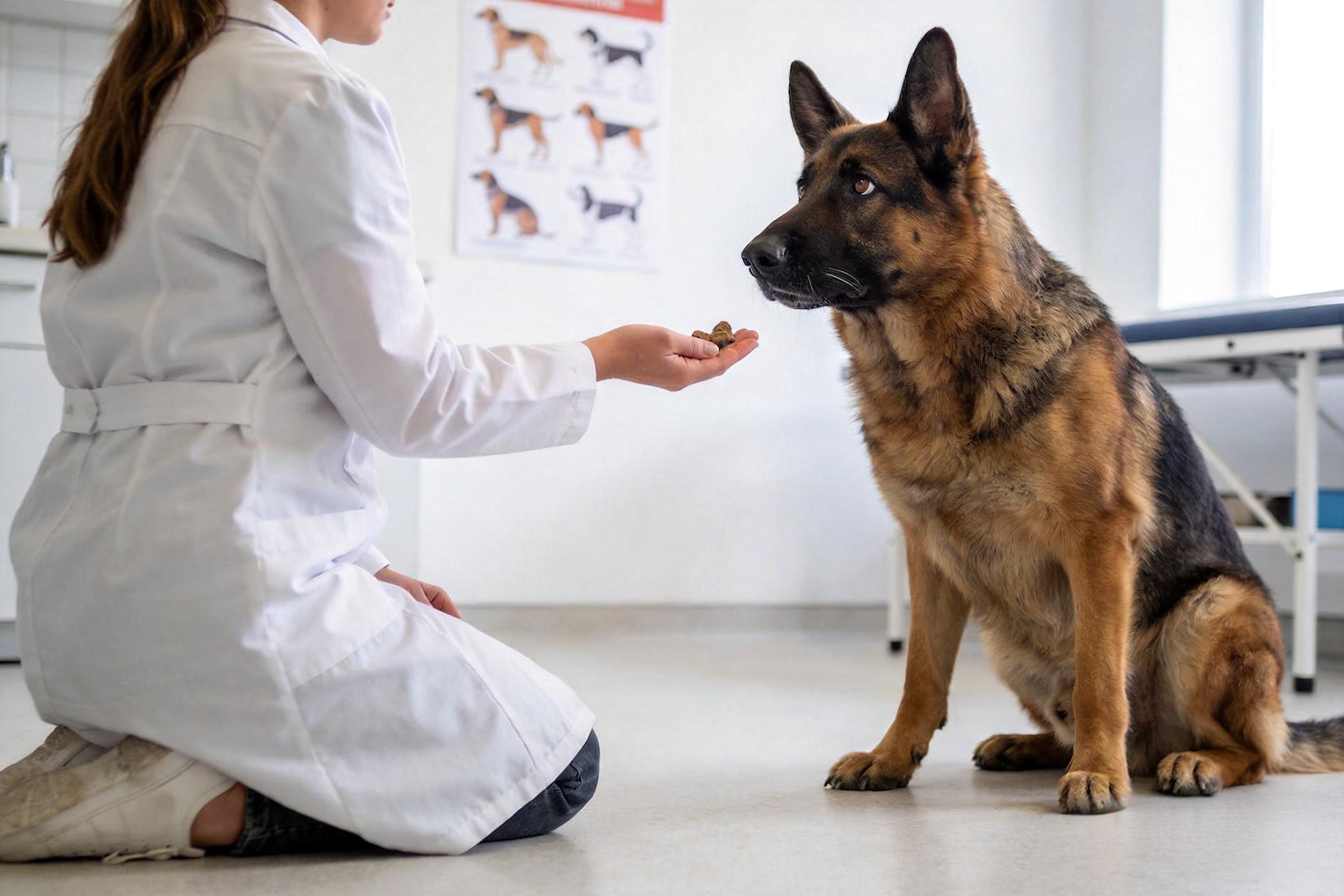
- Desensitization is the process of exposing your dog to a trigger at a very low intensity and a great distance. You find the point where your dog can see the trigger but remains calm and able to take a treat — this is known as working “under-threshold.”
- Counter-conditioning is simultaneously changing your dog’s emotional response to that trigger. You pair the appearance of the scary thing with something incredibly positive, like a high-value treat.
For example, if your dog is reactive to people, your starting point might be sitting in a quiet park 50 feet away from a path where people occasionally walk. Every time a person appears, you mark it with a “yes!” and give your dog a piece of cheese. Over many sessions, your dog’s brain begins to form a new neural pathway. You only decrease the distance when your dog is 100% comfortable at the current one.
Section 2: A Step-by-Step Blueprint for Socializing Dogs
Step 1: Manage the Environment for Safety
Before any socialization work begins, safety is paramount.
- Gear Up: Use a well-fitted front-clip harness and a standard 4-6 foot leash for maximum control. Avoid retractable leashes, as they offer very little control in an emergency. For dogs at risk of biting, a properly fitted basket muzzle is a kind and essential tool to ensure everyone’s safety during the process.
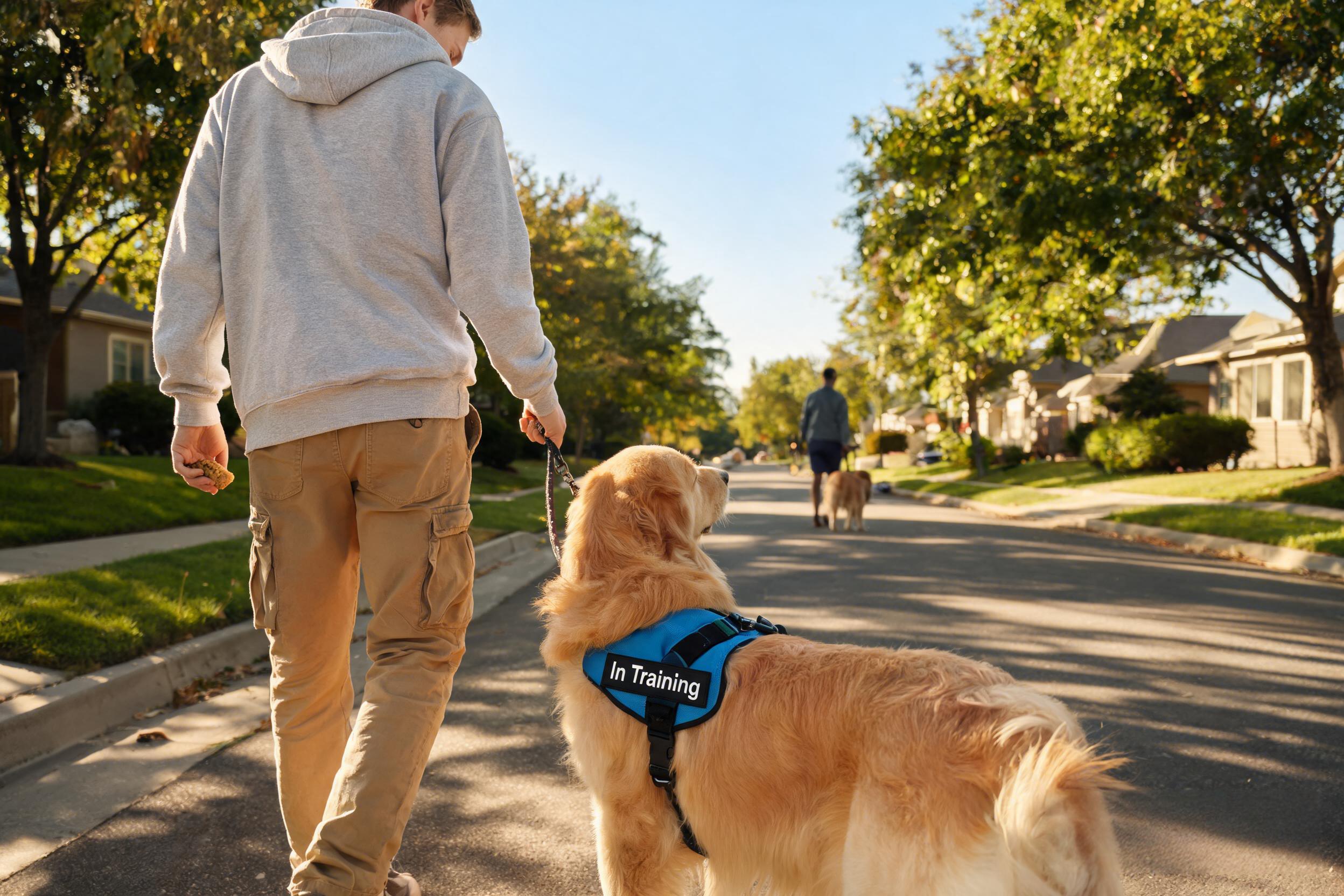
- Use “Do Not Pet” Gear: Leashes, collars, or bandanas with labels like “In Training,” “Do Not Pet,” or “Nervous” are invaluable for setting boundaries with the public.
Step 2: Building a Foundation of Trust and Basic Obedience
- The Decompression Period: This is non-negotiable for adopted dogs. Follow the “rule of threes”: three days to decompress, three weeks to learn your routine, and three months to feel at home. Keep your new dog’s world small and predictable during this period.
- Establish Reliable Cues: Teach and reinforce basic cues like “sit,” “look at me,” and a reliable recall. A simple “sit” can break a fixation and help your dog refocus on you for guidance and a reward.
Step 3: The Gradual Exposure Therapy
- Start with Observation, Not Interaction: Take your dog to a low-traffic area where they can see other dogs and people from a distance. Reward calm behavior as triggers appear and disappear. This is the core of the “Look at That” game.
- Progress to Parallel Walks: If your dog is okay with other dogs at a distance, arrange a parallel walk with a calm friend and their dog. Walk on opposite sides of the street, moving in the same direction.
- Introductions: For adult dogs, structured introductions are key. Avoid dog parks — they are unpredictable, high-arousal environments that are a recipe for disaster for a dog with social challenges. Instead, do one-on-one introductions in a neutral location with a known, calm dog, with both dogs on a loose leash.
- Variety Is Key: To build true confidence, you must generalize these skills. Practice in different locations, with different people, and introduce new sounds and textures.
Step 4: Tracking Progress and Understanding Capacity
A major shift in modern training is the focus on a dog’s emotional state and capacity for learning. One of the most important concepts to understand is “trigger stacking” — the accumulation of stress over time. A single scary event might be manageable on its own, but if your dog has a stressful vet visit in the morning, a loud noise at noon, and a startling encounter with a stranger in the evening, their stress bucket may overflow by the end of the day. Keep sessions short and watch for signs of stress accumulation — it’s often better to do ten 5-minute sessions than one 50-minute session.
Another key insight is the role of enrichment as a co-therapy for stress. Activities like nose work, puzzle toys, and “sniffaris” (walks where you let your dog lead with their nose) lower cortisol levels and build a dog’s overall resilience. A dog that is mentally and physically enriched is better prepared to handle the emotional labor of socialization.
Section 3: Comparing Socialization Approaches by Age and Context
| Factor | Puppy (under 16 weeks) | Adult Dog / Rescue Dog |
|---|---|---|
| Goal | Exposure — build a solid foundation for a lifetime of confidence | Management & improvement — reduce fear, build tolerance, and learn to cope with triggers |
| Pace | Fast — puppies are sponges, absorbing new information rapidly; aim for 5-10 new, positive experiences per day | Slow — requires a deliberate, “inch-by-inch” approach; progress is measured over weeks and months |
| Method | Playful, varied exposure with a checklist | Deliberate counter-conditioning, working below threshold with high-value treats |
| Expectations | High — a well-socialized puppy should be comfortable with almost all everyday situations they were exposed to | Realistic — you may not be able to “fix” everything, but expanding the comfort zone is a massive win |
| Key Mistake | Inaction — failing to get the puppy out and about during the critical window | Flooding — taking them to a dog park to “get over it,” which almost always backfires |
Recommended Products for a Successful Socialization Journey
See the comparison cards below for our top picks across safety gear, treat access, and public boundary-setting.
FAQ
1. Is it ever too late to socialize a dog?
No. While the critical socialization period in puppyhood makes early exposure easiest, the brain remains capable of forming new associations throughout a dog’s life. Adult dogs can learn to be more comfortable around triggers through the structured process of desensitization and counter-conditioning.
2. Should I take my scared dog to the dog park to socialize them?
Absolutely not. Dog parks are unpredictable, uncontrolled, high-arousal environments. For a dog who is fearful or reactive, this is “flooding” and will almost certainly make their fear worse. Instead, start socializing your dog by working at a distance from other dogs, in controlled environments where you can manage the variables.
3. How do I socialize an adult rescue dog who has a history of being fearful?
Start with a decompression period. Give your new dog at least a few weeks to settle into your home before you introduce any new major experiences. Then, begin with the mildest trigger and work at a distance where your dog can observe without shutting down. Use extremely high-value treats to build positive associations, and keep sessions short (10-15 minutes).
4. What if my dog growls at another dog or person during a socialization session?
Don’t punish the growl. Growling is a clear form of communication that your dog is uncomfortable. Calmly remove your dog from the situation, increasing the distance from the trigger. The goal is to keep your dog “under-threshold.”
5. What are the most common mistakes people make when socializing their dog?
The top mistakes are: flooding (forcing the dog into overwhelming situations), going too fast (not recognizing the signs of stress and pushing forward when the dog needs to slow down), and only focusing on interactions (forgetting that socialization also includes different surfaces, sounds, and handling).
Conclusion
Socializing a dog is one of the most profound gifts you can give your furry friend. It replaces fear with confidence, anxiety with calm, and reactivity with trust. Whether you’re starting with a curious 8-week-old puppy or a wise 8-year-old rescue, the journey requires patience, consistency, and a deep understanding of your dog’s emotional state. Progress isn’t linear, stress accumulates, and the goal is to expand your dog’s comfort zone — not to force them to be something they aren’t.
Disclaimer: This article is for informational purposes only. Consult a certified trainer or veterinary behaviorist for dogs showing signs of severe fear or aggression.