Summary
Grooming a Poodle is about more than looks; it’s a crucial component of their overall health and well-being. This guide covers everything from coat care and ear cleaning to nail trimming, making grooming a positive experience for both you and your dog.
Why Are You Here? The Problem with Poodle Coats
If you’re reading this, you are likely experiencing the unique reality of Poodle ownership. The coat that draws so many to this intelligent breed — its soft, curly, “hypoallergenic” hair — is also its biggest maintenance challenge. Unlike double-coated dogs that shed seasonally, the Poodle’s hair grows continuously, much like human hair. If not brushed frequently, this hair quickly mats and tangles. These mats aren’t just an aesthetic issue; they can pull painfully on the skin, leading to irritation and even infection.
The search for a grooming guide often begins when an owner realizes they’ve lost the battle against a knot, or when they’ve paid a hefty vet bill for a matted coat that had to be shaved entirely. This guide is designed to give you the confidence and knowledge to take control of your Poodle’s grooming routine in 2026.
What Is Poodle Grooming and Why Does It Matter?
Poodle grooming is the complete care regimen required to maintain the coat, skin, ears, nails, and teeth of a Poodle. It involves more than just a haircut; it is a medical and hygiene necessity.
Why It Matters
- Health: Regular grooming prevents painful matting, promotes healthy skin and circulation, and allows you to check for lumps, bumps, parasites, or signs of infection.
- Hygiene: It prevents overgrown nails that can cause skeletal issues, removes debris and wax from ears to prevent infections, and cleans teeth to avoid dental disease.
- Bonding: Grooming is an excellent opportunity for bonding. When done with patience and positive reinforcement, it builds trust and reduces anxiety during vet visits.
The 2026 Insight: The “Veterinary Grooming” Approach
A unique angle for 2026 is a shift from purely aesthetic grooming to “veterinary grooming.” This means viewing grooming as a non-negotiable health check. As you brush, you’re not just detangling; you’re performing an at-home physical exam. When you brush the face, feet, and tail, you are acting as your dog’s first line of defense against health issues. The rise in popularity of Doodles has further highlighted the need for rigorous coat maintenance, as their mixed heritage can sometimes mask the intensity of grooming required.
Section 1: The Breakdown of a Grooming Session
1. Coat Care: Brushing (The Non-Negotiable)
- Frequency: Daily. This is the single most critical rule for Poodle owners. A quick daily brush prevents the formation of mats that will take hours to remove later.
- The Right Technique: Don’t just brush the top layer. Part the hair and brush down to the skin. Work in sections, starting from the bottom of the leg and moving upwards to avoid pulling the skin.
- Tools:
- Slicker Brush: Your primary tool. Look for one with fine, bent metal teeth (pin-style) to penetrate the curl without scratching the skin.
- Metal Comb: Use this to check your work. If a comb cannot pass through the coat down to the skin, you have missed a tangle.
- Dematting Rake: For carefully cutting out small, stubborn knots.
2. Bathing and Drying
- Frequency: Every 3 to 8 weeks, depending on activity level and coat length. Over-bathing can strip natural oils, while under-bathing can lead to skin problems.
- The Wash: Always brush thoroughly before getting the coat wet. Water and shampoo will only tighten existing tangles. Use a high-quality dog shampoo formulated to maintain the skin’s pH balance.
- The Drying Process: This is often the most challenging part for owners. A high-velocity dryer is the gold standard for a Poodle. It blows water and loose hair out of the coat, leaving it straight and fluffy. Without this, the coat is prone to re-matting as it dries. Pat dry with a towel — rubbing causes friction and mats.
3. Trimming and Haircuts
- Frequency: Every 4-6 weeks.
- Clippers: Invest in professional-grade clippers with a powerful motor to handle thick coats. The blade number corresponds to the length of the cut. A #10 blade is often used for the face, feet, and sanitary areas to prevent nicks.
- Popular Styles:
- Puppy Clip: A short, one-length trim all over the body, often with a pom-pom on the tail and topknot on the head. A low-maintenance option for pets.
- Lamb Cut: Longer hair on the legs and body, cut short on the face, feet, and base of the tail.
- Continental Cut: A show clip with pom-poms on the hips, tail, and legs. This requires extensive maintenance and is not recommended for casual pet owners.
4. The “Poodle Essentials”: Ears, Nails, and Teeth
- Ears: Poodles are prone to ear infections due to their hair-filled, floppy ear canals. Weekly checks are essential. Pluck or clip the hair inside the ear and clean with a vet-approved solution to prevent moisture and wax buildup.
- Nails: If you hear your dog’s nails clicking on the floor, they are too long. Trim them every 3-4 weeks using guillotine clippers or a grinder. Have styptic powder on hand in case you nick the quick.
- Teeth: Brush your Poodle’s teeth daily with dog-specific toothpaste. This prevents tartar and gum disease. Hard chews like bones and antlers can also aid in dental maintenance.
Section 2: How to Start Grooming at Home
- Puppy Exposure: Begin immediately. Short, positive sessions with treats. Let them sniff the tools and feel the vibrations of the clippers.
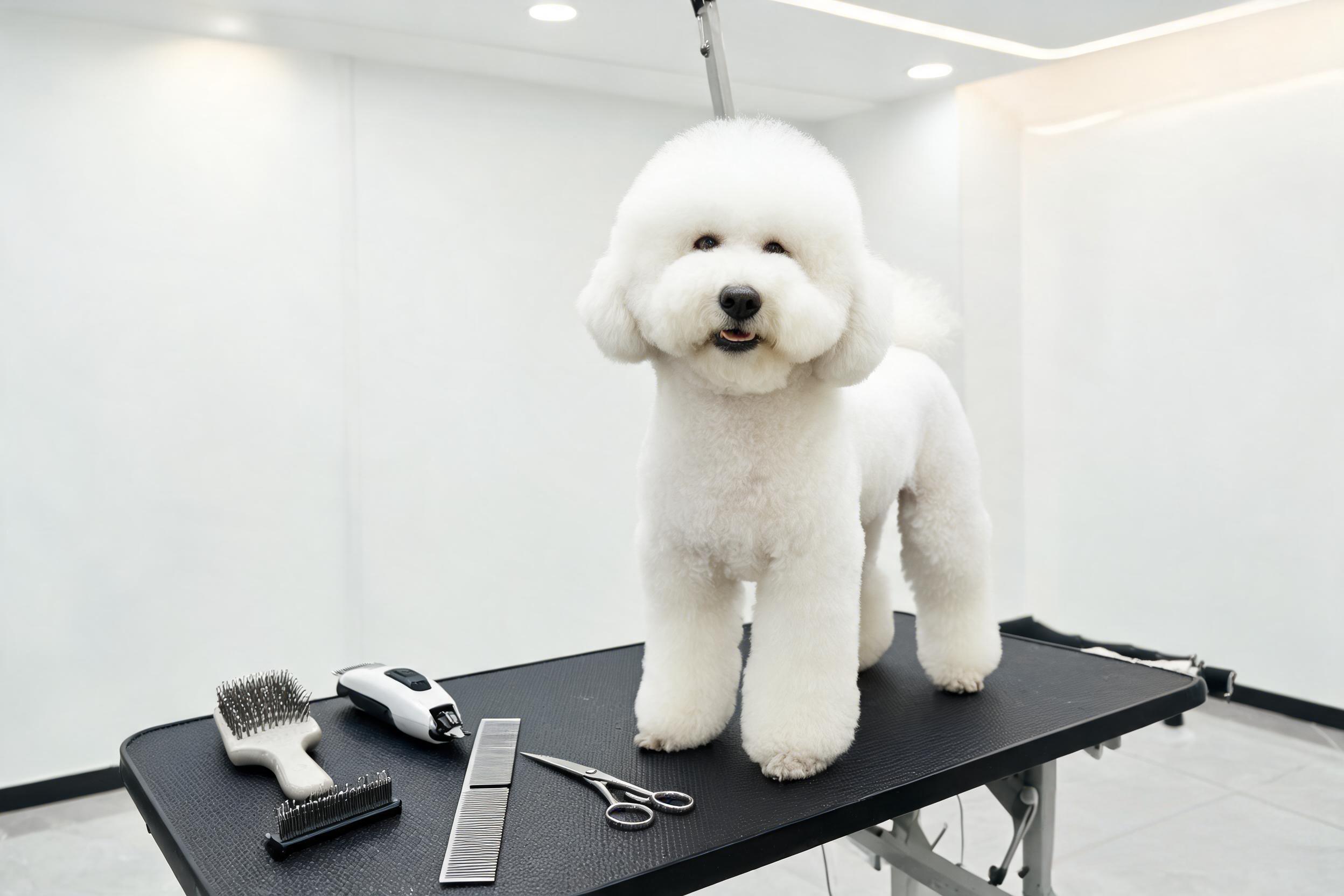
- Set Up a Grooming Station: Use a table with a non-slip surface, or a grooming arm with a loop to gently secure your dog.
- Brush, Brush, Brush: Before any water touches your dog, ensure the coat is completely tangle-free.
- Bathe and Dry Thoroughly: A dirty coat will dull clipper blades. Ensure the coat is 100% dry and fluffed before you start cutting.
- Clipping Sequence: Clip the face and feet first, then the body, and save the tail for last. Take your time — hair grows, and mistakes can be corrected as it grows in.
- Finish Up: Use thinning shears to blend lines and create a neat finish. Trim nails and clean the ears as a final step.
Section 3: Comparison of Grooming Tools
Clippers: Corded vs. Cordless
| Feature | Corded Clippers | Cordless Clippers |
|---|---|---|
| Power | Consistent, high-speed power; ideal for thick, matted coats | Moderate to high power; best for maintenance trims and touch-ups |
| Portability | Limited by cord, but often long reach | Unlimited mobility — great for skittish dogs that move around |
| Battery Life | Always ready, no downtime | Prone to running out of charge mid-groom; choose long-lasting batteries |
| Noise | Typically louder, which can scare sensitive dogs | Many models are specifically designed to be quiet (under 50 dB) |
| Best For | Owners of Standard Poodles or very thick, dense coats | Owners of Miniatures or Toys, quick touch-ups, and dogs that fear loud noises |
Brushes: Slicker vs. Rake vs. Comb
| Tool | Primary Use | Benefit for Poodles |
|---|---|---|
| Slicker Brush | Daily de-tangling and removing loose hair | Reaches deep into the curl to break up knots before they become mats |
| Dematting Rake | Cutting through dense, existing mats | Features sharp blades to safely slice the mat, but should be used with extreme caution |
| Metal Comb | Final check and finishing | The “litmus test” for a tangle-free coat — if the comb stops, you haven’t brushed thoroughly |
Recommended Products
See the comparison cards below for our top picks across clippers, brushes, and all-in-one grooming systems.
FAQ
1. How often should I really brush my Poodle?
Daily. Even 5-10 minutes a day with a slicker brush and comb is enough to prevent painful, expensive mats. Poodle hair is prone to felting, so consistency is key.
2. Is it better to groom a Poodle when the coat is wet or dry?
Dry. You should only clip a clean, dry, and fully brushed-out coat. Clipping a wet or dirty coat will damage your clippers and result in an uneven cut. Brushing before the bath is also essential as water tangles the hair further.
3. Can I use human shampoo on my Poodle?
Veterinary-grade dog shampoos are recommended to maintain the skin’s delicate pH balance, even though some Poodle coats resemble human hair texture. Avoid harsh detergents not formulated for canine skin.
4. How do I safely cut my Poodle’s hair around their eyes?
Use a #10 blade on your clippers, as it is less likely to nick the skin. Always hold the skin taut with your free hand to flatten the surface and keep the clipper moving in the direction of the hair growth. Never use scissors near the eyes.
5. My Poodle hates grooming. What can I do?
Make it a positive experience. Start slow, use high-value treats, and keep sessions short. Take breaks. Exercise your Poodle before a grooming session to reduce anxiety. If they are severely anxious, consider consulting a certified dog trainer or using a quiet, cordless clipper.
Conclusion
Grooming your Poodle is a commitment, but it is one of the most important things you can do for their physical and emotional health. By viewing grooming not as a chore, but as a bonding experience and an essential health check, you will transform the process for both of you. Build a routine, use the right equipment, and your Poodle will not only look spectacular but will be healthier and happier for it.
Disclaimer: This article is for informational purposes only. Consult a professional groomer or veterinarian for specific concerns about your dog’s coat or skin health.