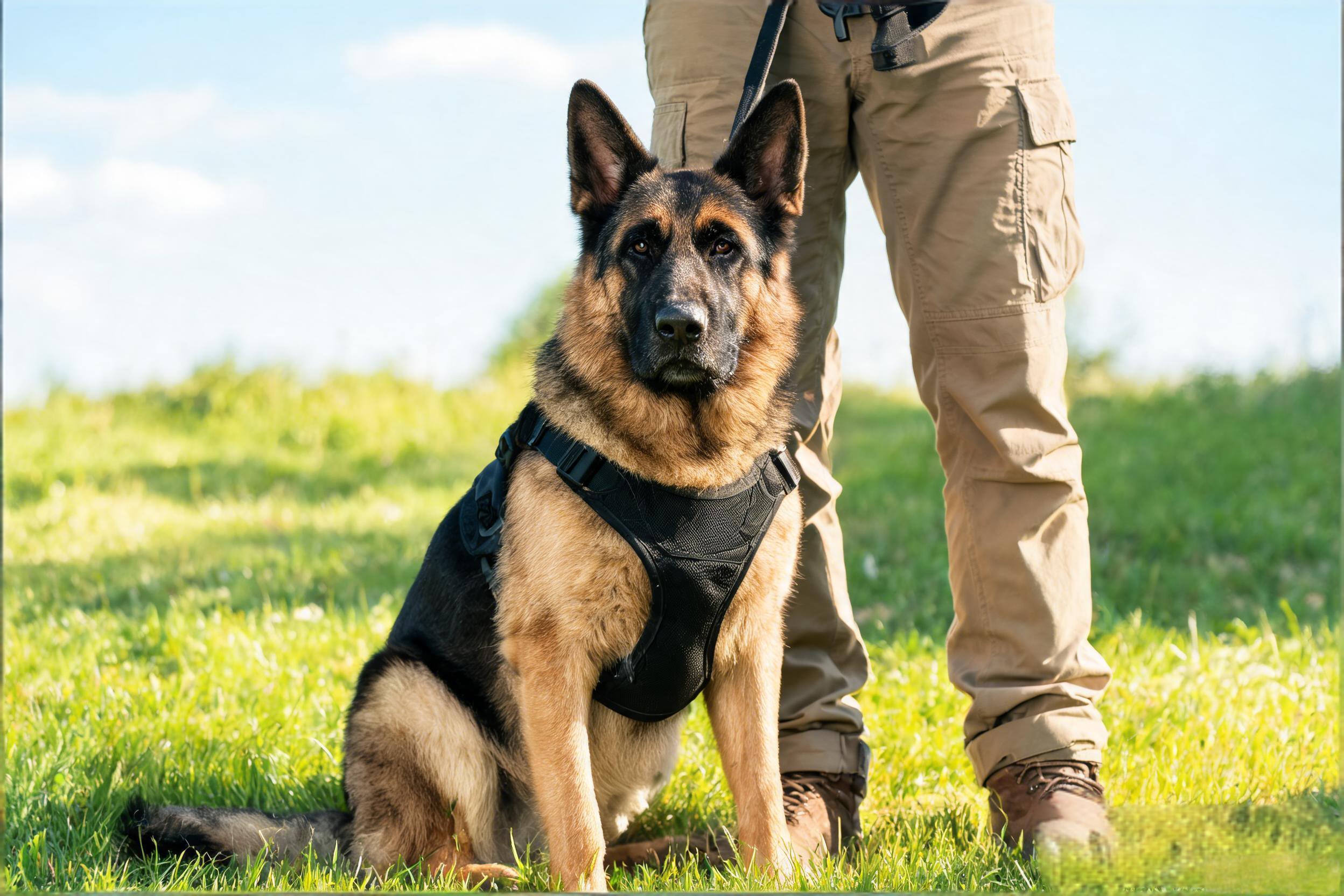
Short Summary: Training a German Shepherd isn’t about teaching tricks; it’s about providing a job for a working genius. This guide uses a unique “employment” framework to address the breed’s specific needs for mental engagement and structure, moving beyond basic commands to build a confident, balanced partner.
Why You’re Here: The “Unemployed Genius” Problem
You’re searching for German Shepherd training advice not just to teach your dog to sit, but because you’ve likely already glimpsed the reality of life with a GSD. Perhaps your puppy has turned your backyard into a lunar landscape, treats your children like a flock of sheep, or alerts the neighborhood to every falling leaf. This isn’t “bad” behavior; it’s the result of a high-drive, intelligent dog being “unemployed.”
The core problem isn’t a lack of intelligence; it’s the misdirection of it. German Shepherds are one of the most intelligent breeds, possessing a unique “working-dog smart” that allows them to anticipate and problem-solve. A GSD that isn’t given a structured outlet will invent its own work, which often manifests as reactivity, destructiveness, or guarding behaviors. By 2026, the modern dog owner faces additional challenges: a world full of distractions, increased instances of “lockdown puppies” with socialization deficits, and a trend toward over-reliance on physical exercise while neglecting the all-important mental component. This guide addresses these issues head-on, moving away from outdated dominance myths to a modern, relationship-based approach.
The Core Difference: “Working-Dog Smart”
What makes a German Shepherd different from other breeds? It’s not just that they are smart; it’s their type of intelligence. A Border Collie might be a problem-solving genius, but a GSD is a strategic partner. They don’t just learn commands; they learn the rules of the system, anticipate the next step, and want to work with you, not just for a treat. This distinction is crucial. Training a GSD is about building a partnership. They are deeply handler-focused, often bonding intensely with one person. This quality, while beautiful, means they are also incredibly sensitive to your emotional state and training methods. Harsh corrections can shatter their confidence and trust, leading to the very anxiety and reactivity you are trying to prevent.
Section 1: The Foundation — What Every GSD Needs
The Socialization Imperative
For most breeds, socialization is recommended; for the German Shepherd, it is a non-negotiable requirement. Bred to be watchful and protective, a GSD without proper socialization does not become “tough” — they become anxious and reactive. The critical socialization window closes around 12-16 weeks of age, making early, positive exposure to new people, dogs, environments, and sounds the single most important investment you can make.
| Socialization Period | Actionable Steps |
|---|---|
| 8-12 Weeks | Safe exposure: carry your puppy in a sling, stroller, or car to expose them to urban sounds, traffic, and crowds before they are fully vaccinated. The goal is observation, not interaction. Introduce them to a diverse range of people in a positive, controlled manner. |
| 3-6 Months | Structured classes: enroll in a group puppy class. This isn’t just for obedience; it is the prime setting for your GSD to learn to focus on you amidst distractions, which is crucial for preventing leash reactivity later on. |
| 6+ Months | Ongoing exposure: socialization doesn’t end at 16 weeks. Continue to take your GSD to new environments, but now with the expectation of obedience and neutrality. |
The “Job” Framework: Mental Over Physical
A common misconception is that a tired German Shepherd is a good German Shepherd. While they need 60-90 minutes of vigorous exercise daily, a physically exhausted but mentally unstimulated GSD is still a restless, anxious dog. The key is to exercise the mind as much as the body. A “job” can be anything that requires them to think and problem-solve.
Examples of jobs for a GSD:
- Structured Obedience: Daily 5-10 minute sessions teaching new cues or polishing known ones.
- Scent Work & Nose Games: Hide treats or toys around the house and let them use their incredible noses to find them.
- Puzzle Toys: Use interactive feeders and puzzle games to make them work for their food.
- Dog Sports: Agility, tracking, Rally, or IPO are excellent outlets for their drive and intelligence.
Section 2: Proven Training Solutions & Methods
The Power of Positive Reinforcement
Despite their tough appearance, German Shepherds are surprisingly sensitive and do not respond well to harsh, punitive methods. Positive reinforcement — rewarding desired behaviors with treats, praise, or toys — is the most effective and scientifically proven method. It builds confidence, strengthens your bond, and creates a dog that works eagerly with you, not out of fear. Consistency is paramount. If you reward a behavior one day and ignore it the next, the GSD’s intelligence will lead them to test every behavior until they find the new rule.
The “Place” Cue: Your Secret Weapon
One of the most valuable cues to teach a GSD is “Go to Place.” This command sends them to a specific mat, bed, or crate and is a powerful tool for impulse control, managing territorial barking at the door, and teaching them to settle calmly. It provides a “job” to do in the face of excitement or stress.
Crate Training: Not a Prison, a Sanctuary
Crate training should be viewed as a positive experience, not a punishment. A crate is a safe haven where your GSD can relax and decompress. It is also an indispensable tool for house-training and preventing destructive behaviors during the puppy phase. Begin by making the crate a positive space, feeding meals inside and giving high-value treats or a Kong toy for quiet time inside. This not only aids in housetraining but is an early exercise in independence, helping to prevent separation anxiety, a common struggle for this handler-focused breed.
Section 3: Comparison — Choosing the Right Training Approach
| Feature | Engagement-Based Training | Traditional Obedience Classes (Only) | Aversive/Punishment-Based Training |
|---|---|---|---|
| Core Philosophy | Builds a partnership; dog works for the relationship | Dog works for a reward (treat/toy) | Dog works to avoid a consequence (correction) |
| Best For | GSDs who thrive on a strong handler connection | Foundational skills in a structured environment | This method is not recommended for GSDs |
| Common Pitfall | Requires high engagement from the handler | Often does not generalize to real-world distractions | Damages trust, increases anxiety, and can create reactivity |
| Our Verdict | Recommended — this is the gold standard | Essential — best when combined with engagement-based principles | Avoid — harmful to this sensitive and intelligent breed |
Recommended Products for Your GSD
See the comparison cards below for our top picks across mental enrichment, harness control, and puzzle toys.
FAQ
1. At what age should I start training my German Shepherd?
You can start the day you bring them home, as early as 8 weeks old. Puppies have the capacity to learn basic cues like “sit” and “come” from a very young age. Early training should focus on socialization, crate training, and building a foundation of positive associations.
2. How do I stop my German Shepherd from being reactive on the leash?
The key to preventing this is early and ongoing socialization in controlled, positive settings. If reactivity has already developed, it’s not a “dominance” issue but a fear or frustration response. Professional guidance from a trainer who uses positive reinforcement is crucial. They will work with your dog at a safe distance from triggers and gradually decrease that distance as your dog’s confidence grows.
3. Do German Shepherds need a job to be happy?
Yes, they genuinely do. A “job” is any activity that provides mental stimulation, such as daily obedience practice, puzzle toys, scent work, or dog sports. Without this mental outlet, they are far more likely to develop anxiety, destructive behaviors, and nuisance barking.
4. Are German Shepherds good with children?
Absolutely, when properly socialized and trained. They are loyal, protective, and can be incredibly gentle. However, it’s critical that the dog is socialized with children from a young age and that training is a family affair. All family members should participate in training to prevent the dog from over-bonding to one person.
5. Why is my German Shepherd barking at everything?
This is their guarding instinct and natural alertness at work. The solution is not to suppress the instinct but to channel it. Teach a cue like “thank you” to acknowledge their alert, and then use a “Place” cue to send them to a designated spot to settle. This gives the guarding drive a defined job description instead of letting it run wild.
Conclusion
Training a German Shepherd is a journey, not a destination. It demands patience, consistency, and a deep understanding of what makes them tick. The reward for this investment is not just a “good dog,” but a loyal, confident, and capable partner for life. By treating your GSD as the working genius they are, you’ll unlock a bond and a level of companionship that is truly unique.
Disclaimer: This article is for informational purposes only and does not constitute professional training or veterinary advice. Consult a certified trainer for persistent behavioral issues.