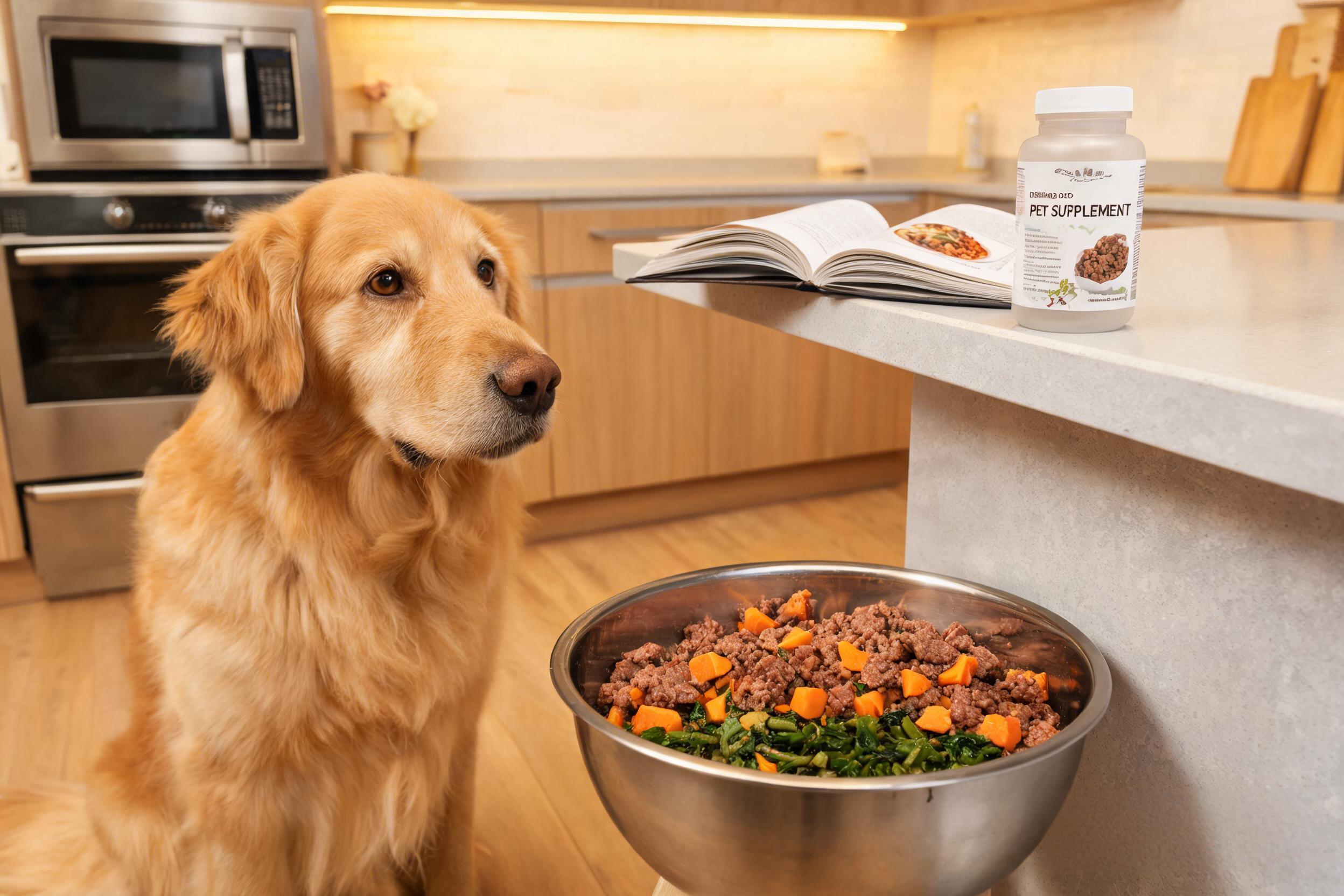
Short Summary: Homemade dog food offers unparalleled control over ingredients and freshness, but getting it right requires knowledge, planning, and a commitment to nutritional balance. This guide provides a veterinarian-informed overview of the benefits, risks, and practical steps for creating healthy, balanced meals for your dog, including expert-approved recipes and essential supplement recommendations.
The Problem: Why “What’s in the Bowl?” Matters More Than Ever
In 2026, the conversation around pet food has shifted dramatically. We are in the midst of the “fresh pet food movement,” the fastest-growing segment in the pet food industry globally. This isn’t just a passing fad. Driven by a “pet parent” mentality where 87% of owners feel highly bonded with their pets, we are increasingly viewing our dogs as family members and extending our own health values to them.
Many of us are asking the same question: “If I wouldn’t eat highly processed food with mystery ingredients, why should my dog?” Studies show that up to 53% of pet owners give the same or higher priority to buying healthy food for their pet as they do for themselves. This has led to a surge in interest in homemade diets, as people seek to move away from highly processed commercial kibble. However, the path to a healthier bowl is fraught with potential pitfalls, primarily the risk of nutritional imbalances. This guide will navigate those risks, helping you understand how to prepare safe, nutritious, and delicious homemade meals for your canine companion.
What is a Homemade Dog Food Diet?
A homemade dog food diet is exactly what it sounds like: meals prepared by the owner from fresh, whole-food ingredients intended to serve as a primary or supplemental food source. This is a significant step away from the traditional model of feeding only commercial kibble or canned food. In 2026, the definition has broadened to include several approaches:
- Cooked Homemade Meals: This involves gently cooking ingredients like proteins (chicken, turkey, beef, fish), carbohydrates (rice, sweet potatoes, oats), and vegetables.
- Raw Meals (BARF/Biologically Appropriate Raw Food): These diets consist of uncooked ingredients, including muscle meat, offal, and bones, often combined with fruits and vegetables.
- Fresh Commercial Food: While not technically “homemade,” this category (often refrigerated or frozen) competes in the same space by offering fresh, human-grade ingredients that mimic a home-cooked meal without the kitchen work.
- Supplemental Homemade Toppers: Many owners use home-cooked food as a nutritious topper to their dog’s regular high-quality kibble.
This “humanization” of pet food is a key trend for 2026, with owners expecting their pets’ food to match the quality of their own. This includes adding “superfoods” like turmeric, blueberries, and bone broth to their dog’s meals. But as the trend grows, so does the need for expert guidance.
Why Home Cooking Matters (and Why It’s Tricky)
The appeal of making your dog’s food is clear. It can be an act of love and a direct way to improve their health. You control the ingredients, avoiding artificial preservatives, fillers, and ingredients that may trigger allergies. Anecdotally, many owners report shinier coats, more energy, and better digestion when switching to fresh food.
However, the enthusiasm for fresh food must be tempered with science. A pivotal 2026 study published in Veterinary Practice News highlights the stark reality: an evaluation of 200 published home-prepared recipes for adult maintenance in dogs revealed at least one deficiency in an essential nutrient, according to National Research Council or AAFCO guidelines, in the majority of diets (95%), while 83.5% of recipes had multiple deficiencies. This is the primary challenge. Unlike commercial food, which must pass strict AAFCO feeding trials, homemade diets are not inherently balanced. The most common deficiencies are calcium, phosphorus, and vitamin D, which can lead to serious conditions like secondary hyperparathyroidism, causing bone deformities, muscle twitching, and seizures.
This means that simply throwing together chicken and rice is not a complete diet. It is a recipe for malnutrition in the long term. While your dog may seem to enjoy it, deficiencies can take months or even years to manifest. The key is to move beyond “cooking” and into “formulating.”
Section 1: The Science of a Balanced Bowl
Creating a balanced homemade diet requires a deeper understanding of your dog’s nutritional needs. A balanced canine meal is built on a foundation of specific ratios and essential additions.
The Macronutrient Matrix
A common starting point for a balanced homemade meal, as recommended by veterinary resources, is a ratio of roughly:
- ~40% Protein (Animal-based): This is the cornerstone. Choices like chicken, turkey, lean ground beef, or fish provide essential amino acids.
- ~30% Carbohydrates: Digestible carbs like brown rice, oats, or sweet potatoes provide energy and fiber.
- ~30% Vegetables & Fiber: For micronutrients, antioxidants, and digestive health. Options include broccoli, carrots, spinach, and green beans.
The Critical Micronutrients: The “Invisible” Ingredients
This is where most home recipes fail. You cannot simply cook the above ingredients and serve them. The “complete and balanced” part of the equation comes from adding specific supplements.
- Calcium: This is non-negotiable. The calcium-to-phosphorus ratio must be precise for bone health. For every pound of meat-based recipe, a specific amount of a calcium supplement (like ground eggshell powder or a veterinary supplement) is required. Without it, your dog’s body will leach calcium from its bones, leading to severe issues.
- Vitamin and Mineral Premix: Even with a good calcium source, homemade diets are often deficient in a host of other micronutrients, including zinc, copper, iodine, and vitamins D and E. A high-quality, broad-spectrum vitamin-mineral supplement formulated specifically for homemade diets is essential.
- Essential Fatty Acids: Omega-3 fatty acids (like fish oil) are vital for skin and coat health, as well as reducing inflammation.
Expert Insight for 2026: The risk of nutritional imbalances has led to a 100% increase in requests for veterinary nutritionist consultations since 2019. This underscores a crucial point: if you are serious about switching to a homemade diet, your plan should involve a veterinarian. This isn’t optional; it’s a critical safety measure.
Section 2: Your Solutions & Recipes for Success
If you’re ready to start cooking, approach it with a plan. Here are two vet-informed, AAFCO-friendly recipes to get you started.
Recipe 1: The Balanced Beef & Lentil Bowl
This recipe is designed for adult maintenance and should be supplemented with the required nutrients. This is not a complete and balanced diet without the specified supplement.
Ingredients:
- 2.75 lbs (approx. 1.25 kg) ground beef (85% lean or better)
- 1 cup dried brown lentils
- 0.25 lb (approx. 115g) beef liver
- 0.75 lb (approx. 340g) sweet potato
- 0.5 lb (approx. 225g) carrots
- 0.25 lb (approx. 115g) fresh spinach
- 1 tbsp safflower oil
- 1 tbsp omega-3 fish oil
- Essential Supplement: A veterinary-recommended vitamin and mineral mix for homemade diets (follow the dosage on the package based on the yield).
Instructions:
- Boil the liver and sweet potato until tender. Chop the liver into small pieces.
- Cook the brown rice according to package directions.
- In a large skillet, cook the ground beef until fully browned. Drain any excess fat.
- Finely chop or food-process the carrots and spinach.
- In a large bowl or pot, combine the cooked beef, cooked rice, cooked sweet potato, chopped liver, and raw veggies.
- Stir in the safflower oil, fish oil, and your essential vitamin/mineral supplement.
- Mix thoroughly. Once cooled, portion into individual servings and refrigerate or freeze.
Recipe 2: Easy Turkey & Vegetable Medley
A simpler, lower-fat option that is excellent for picky eaters.
Ingredients:
- 1 lb (approx. 450g) ground turkey
- 2 cups cooked brown rice
- 1 cup frozen broccoli, carrot, and cauliflower blend
- 1 tsp dried rosemary (optional, for antioxidants)
- Essential Supplement: A veterinary-recommended vitamin and mineral mix for homemade diets (follow the dosage on the package based on the yield).
Instructions:
- In a large skillet, cook the ground turkey until no longer pink.
- In a separate pot, cook the frozen vegetables according to package directions.
- Combine the cooked turkey, cooked rice, and cooked vegetables in a large bowl.
- Stir in the rosemary and your essential vitamin/mineral supplement.
- Mix well, cool, and portion into airtight containers.
Crucial Note: A 2026 study on diabetic dogs found that while a well-formulated homemade diet was comparable to a commercial diet for glycemic control, it required more frequent veterinary monitoring and insulin adjustments. This highlights that every dog is an individual and their homemade diet must be treated as a medical therapy.
Section 3: Comparison – Homemade vs. Commercial vs. Fresh
| Feature | Homemade Diet | Commercial Kibble | Commercial Fresh (Subscription) |
|---|---|---|---|
| Ingredient Control | Excellent — you control every single ingredient | Poor — ingredients can be unclear or include by-products | Good — human-grade, transparent, but limited choices |
| Nutritional Balance | High risk — requires significant knowledge and veterinary oversight to avoid deficiencies | Excellent — AAFCO-tested, ensures daily complete and balanced nutrition | Excellent — AAFCO-tested, formulated by veterinary nutritionists |
| Cost (per 1,000 kcal) | Moderate to high — averages ~$3.99, varies by protein choice | Low — averages ~$1.20 | High — averages ~$5.56, can be more |
| Convenience | Time-consuming — requires shopping, prep, cooking, and storage | Highly convenient — open and pour | Convenient — delivered, just portion and serve |
| Safety | Requires safe handling — proper cooking required to avoid pathogens | Very safe — pathogen-free through processing | Safe — pasteurized/HPP, requires refrigeration |
| Ideal For | Owners who want to manage allergies and ingredient needs, willing to work with a vet | Most owners looking for affordable, convenient, balanced daily food | Owners with budget for convenience who want fresh but can’t commit to cooking |
Recommended Products
To ensure success with your homemade dog food journey, you need the right supplements and tools. See our top three picks below.
FAQ
1. Is it cheaper to make my own dog food?
It depends. Homemade diets can cost an average of $3.99 per 1,000 kcal, compared to $1.20 for dry food. However, they are cheaper than commercial wet foods ($5.56) and can be cost-effective if you choose affordable proteins like chicken, but more expensive if you use beef or specialty meats. Always factor in the cost of your time and the mandatory supplements.
2. Can I just cook chicken and rice for my dog every day?
No. While a chicken-and-rice meal is a great, gentle option for a temporary upset stomach, it is severely nutritionally deficient for long-term feeding. It lacks essential vitamins, minerals, and a proper calcium-to-phosphorus ratio. Over time, this will lead to serious health problems.
3. Is a raw diet better than a cooked homemade diet?
The scientific evidence is mixed. Studies show that raw diets can pose significant health risks due to bacterial contamination (like Salmonella and E. coli), which can also affect human family members. Raw feeders also often have a poorer understanding of the nutritional risks. Cooked diets are safer and, when properly balanced, provide excellent health benefits.
4. What if I just add a multivitamin to my dog’s food?
A general multivitamin is not enough. The most common and critical deficiency in homemade diets is calcium. You must add a specific calcium source in the correct amount based on the weight of the food. A specifically formulated supplement is designed to address the unique deficiencies of a homemade meat-and-vegetable base.
5. How do I transition my dog from kibble to homemade food?
Make the switch gradually over a period of 7-10 days. Start by replacing 25% of their current kibble with the new homemade food, then 50%, then 75%, and finally 100%. Monitor your dog’s stool quality and energy levels during the transition. If you see diarrhea or vomiting, slow the transition down and consult your vet.
Conclusion
Making homemade dog food is one of the most profound ways you can care for your dog, giving them control over the quality and sourcing of their food. As we’ve seen in 2026, this is a powerful trend driven by the “pet parent” mentality and the desire to feed our furry family members like the valued companions they are. But with great love comes great responsibility. A bland diet of chicken and rice is a recipe for illness, not health. Success lies in working with your veterinarian, using a scientifically-formulated supplement, and following a balanced recipe.
Disclaimer: This article is for informational purposes only and does not constitute medical advice. Always consult with a licensed veterinarian before starting your dog on a homemade diet.